Advertisement
OpinionUS, China, Asean: the three dilemmas facing the Philippines’ new leader
- Balancing the Philippines’ security alliance with the US and trading relationship with China will not be easy for whoever replaces Rodrigo Duterte as president
- Manila could easily find itself at the receiving end of punitive actions from Beijing – and then there’s the issue of maintaining Asean centrality and autonomy
4-MIN READ4-MIN
3

When Filipinos go to the polls in May this year to elect a new leader, it could mark a shift in Manila’s position on the disputed South China Sea, and a turning point in the Philippines’ relations with the US – its security ally – and China, its largest trading partner.
Whoever replaces Rodrigo Duterte as president, and there are five leading contenders for the role, he or she will be faced with three dilemmas upon taking power.
First is how to expand economic relations with China to drive recovery from the Covid-19 pandemic while also pushing back against Beijing’s growing challenges to Manila’s maritime interests.
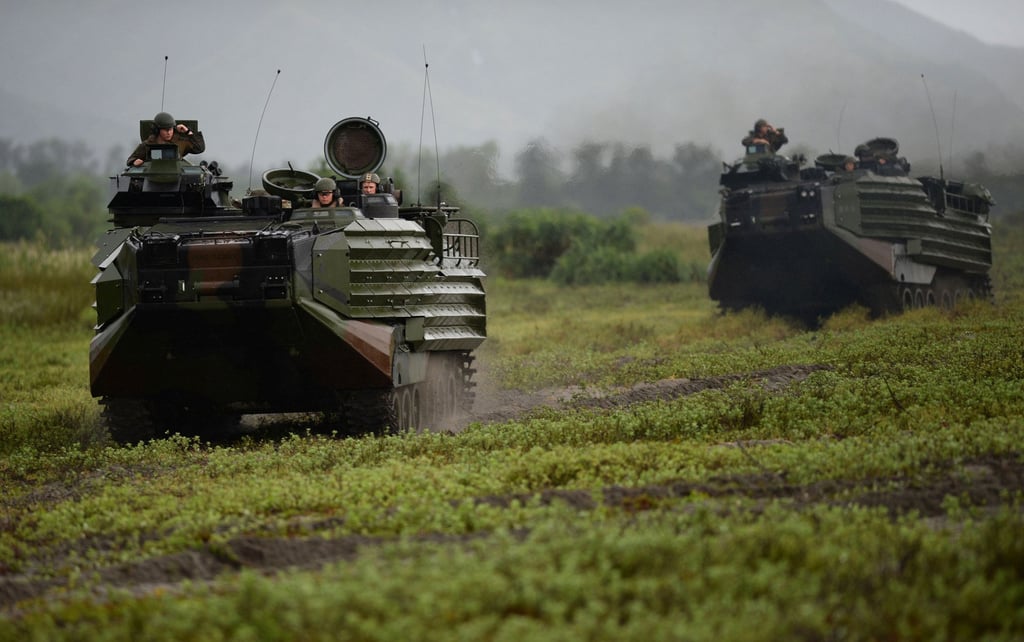
Second is how to strengthen security ties with the United States to support the Philippines’ military modernisation and defend its position in contested waters without overly antagonising Beijing.
Advertisement
Third is how to assess and react to US-led “mini-laterals” such as the Quad security grouping – with Australia, Japan and India – and the Aukus agreement – with Britain and Australia – without compromising Manila’s commitment to Asean centrality. The bloc of 10 nations has long taken pride in being at the core of Asia-Pacific regional architecture, but it is increasingly coming under stress from new security configurations. The Philippines’ skill in navigating this changing landscape will determine if it can rise to become a middle power able to exert considerable influence within its neighbourhood.
When it comes to China, attitudes remain mixed. There is clear recognition of the country’s growing role in the Philippine economy. In recent years, China has been the Philippines’ top source of imports, second-largest investor, and an active builder of infrastructure. It was even the Southeast Asian nation’s top export market for several months last year – demonstrating Beijing’s eagerness to reduce the trade imbalance with Manila by ramping up imports of Philippine electronic and agricultural goods. (In other months, either the US or Japan took the top spot.)
Advertisement
Thus, the question is no longer whether China can deliver on economic largesse, but whether this will leave Manila hamstrung in its foreign policy.
Advertisement
Select Voice
Select Speed
1.00x