-
Advertisement
Coronavirus pandemic
This Week in AsiaPeople

If South Korea is beating the coronavirus, why are so many of its people staying home?

  • South Koreans are staying away from offices, schools and places of worship despite infections falling
  • Experts say Covid-19 has woken people up to new ways of working and many are now loathe to go back

Reading Time:5 minutes
Why you can trust SCMP
Empty desks at an elementary school in Seoul. South Korean schools have opened up, but many students haven’t returned. Photo: EPA
David D. Lee
South Korea is widely seen as a success story when it comes to combating the coronavirus.
As recently as the end of February it was among the worst-hit nations in the world, second only to China for the number of infections. Yet fast-forward just a few months and its thorough testing and contact-tracing regimes are credited with a stunning reversal of fortunes that has seen it held up as an example to the world. The numbers say it all: on March 1, the country recorded more than 1,000 infections in a single day; on Sunday that figure was down to just 38.
And while there have been hiccups along the way – in particular, recent outbreaks in the nightlife area of Seoul and at an e-commerce distribution centre – what has made its success even more impressive is that it has come without the need for the kind of draconian lockdowns seen in many other parts of the world.

02:26

Can South Korea resume normal life after its coronavirus peak?

Can South Korea resume normal life after its coronavirus peak?
Clearly, there is much to celebrate. But amid all the back-patting, in the minds of many experts, a nagging question remains: if South Korea is winning the fight against the virus, why are so many of its people still choosing to stay at home?
Advertisement

Statistics show that despite the country being one of the safest places in the world to venture outside, many South Koreans remain averse to returning to workplaces, schools and places of worship, prompting some experts to suggest Covid-19 may have sparked a long-term change in behaviour as a famously hard-working nation begins to rethink its ideas of workplace etiquette. Given South Korea is ahead of the curve in its fight against the virus, such trends could give a valuable insight into what might be in store for other nations as their own infection levels fall.
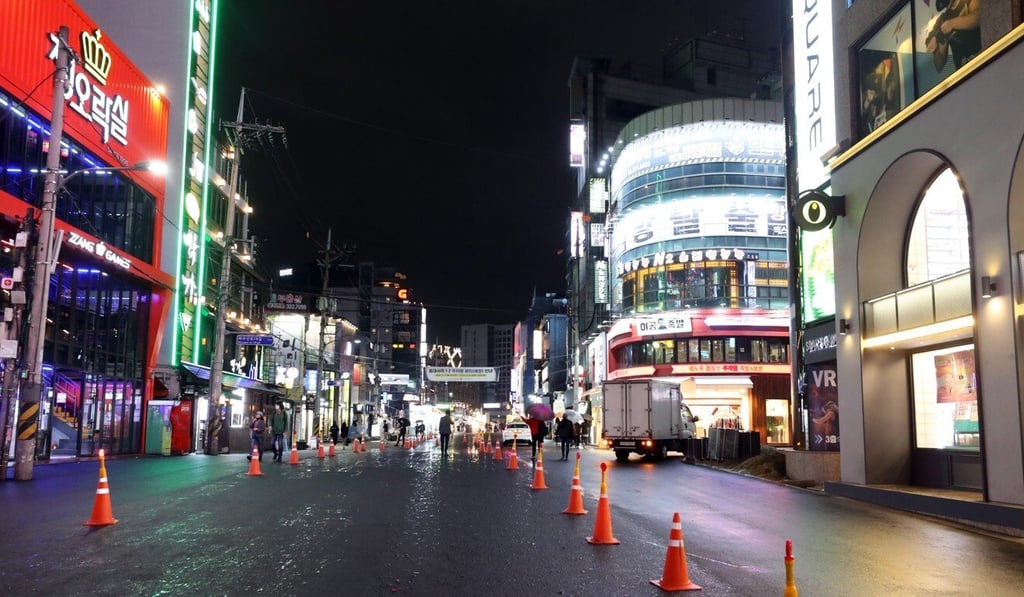
A street in the once-bustling entertainment district of Hongdae in Seoul, South Korea. Photo: EPA
Advertisement

FOR WORKAHOLICS, A MOMENT OF CLARITY

South Korea is a notoriously hard-working nation. An OECD study in 2016 found South Koreans worked longer hours than citizens of any other developed country: an average of 2,069 hours per year, per worker.

Advertisement
Select Voice
Select Speed
1.00x