-
Advertisement
China economy
This Week in AsiaPolitics
Yang XuandDonald Low

On Reflection | China beware, the road to an open financial system is paved with Asian casualties

  • From Japan’s burst bubble to Thailand’s battered baht, past attempts at financial liberalisation by Asian economies highlight the pitfalls ahead
  • Beijing must learn from the region’s failures, or pay a heavy price

Reading Time:5 minutes
Why you can trust SCMP
New car models on show at the Auto Shanghai 2019. Photo: AP
In recent years, the Chinese government has announced a series of measures to open up the financial sector, both to attract foreign investments and to develop its financial system.

In November this year, the State Council of China released its “Opinions on Further Improving Work for the Utilisation of Foreign Capital”. The document includes 20 policy measures in four domains – deepening market opening, strengthening investment promotion, extending the reforms in investment facilitation, and protecting the legitimate rights and interests of foreign investors. These measures aim to create a fairer, more robust and transparent environment for foreign enterprises investing in China.

Compared to the opening up of its goods sector, China’s liberalisation of financial services has been tightly controlled. Its vast financial markets remain largely closed to foreign financial institutions. Contrary to what standard economics says, the history of developing countries in East Asia provides good reasons for the sort of financial repression, capital regulation, and cautious liberalisation that we have seen in China over the last few decades.
Advertisement
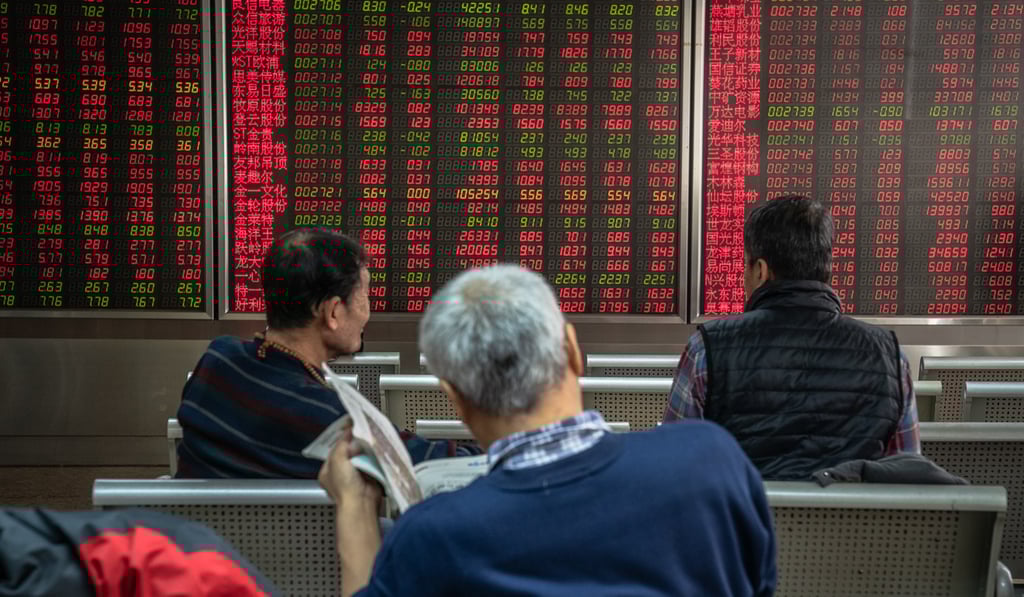
Investors at a securities brokerage in Beijing, China. Photo: EPA
As Joe Studwell argued in How Asia Works, the successful developing countries of Asia were those that kept their financial institutions on a tight leash and aligned with national development strategies. After the war, Japan’s Ministry of International Trade and Industry (MITI) provided direction to the banking system and had broad discretion over the allocation of foreign exchange. This created a financial system that supported state-directed industrial policy.
Advertisement
Similarly, South Korea pursued financial policies aimed at supporting rapid industrial development. In the early 1960s, Park Chung-hee re-nationalised the banks, and financial policy was put mainly in the hands of the Minister of Finance. Unlimited rediscounting of export loans and policy loans were provided to projects favoured by the government. Japan and South Korea also had similar frameworks for capital controls and government direction of banks during the catch-up phase to ensure that domestic capital was mobilised to serve industrialisation goals.
Advertisement
Select Voice
Select Speed
1.00x