Manila sees more Chinese vessels ahead of Beijing’s maritime arrest policy
- Chinese aggression in the region could escalate into armed conflict as Beijing continues to push a strategy to provoke other nations to be ‘first to fire’

Analysts warn China’s aggressive moves in the region, including its detention policy, could escalate into armed conflict as Beijing continues to push a strategy designed to provoke other nations “to be the first to fire”.
Philippine navy spokesman Commodore Roy Vincent Trinidad said on Tuesday that 146 Chinese vessels, including 22 warships, were detected this week in the West Philippine Sea – Manila’s term for the part of the South China Sea that falls within the Philippines’ exclusive economic zone. This was up from 125 vessels last week.
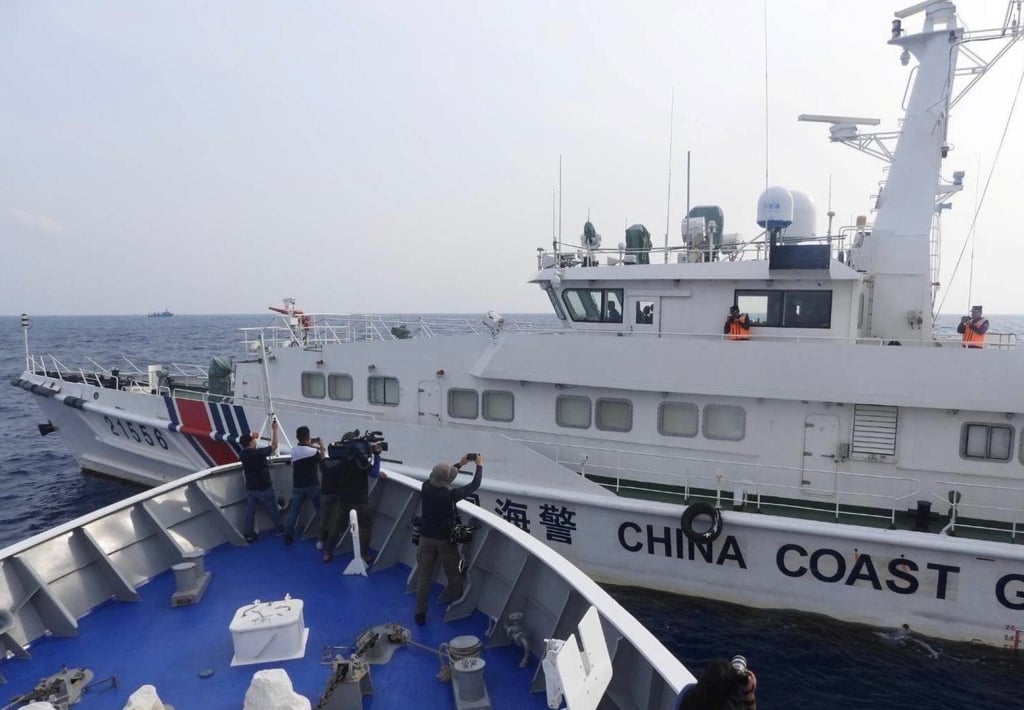
Ahead of the start of the detention policy, Trinidad said the navy had stepped patrols in the area and were coordinating with their security partners.
Marcos Jnr’s warning was a “call to readiness to any eventuality”, including armed conflict, said political analyst Edmund Tayao, president and CEO of think tank the Political Economic Elemental Researchers and Strategists.
“It is also a call to commitment and, for those who are not inclined to commit,” said Tayao, who is also a professor at the Manila-based Graduate School of Law of San Beda University.
“[Beijing’s actions] are a statement of vigorous aggressiveness that simply has to be tempered by today’s international atmosphere of non-violence. China will continue to do what it has always been doing, which is designed to induce their counterpart to be the first to fire.”