The Odd Family, Train to Busan 2: Korean zombie movies come back to life as a political force
- The Odd Family: Zombie On Sale has resurrected South Korea’s interest in the undead
- But, like previous incarnations of the genre such as Train to Busan, this outlandish horror flick has something to say about the living, too

The family at the centre of The Odd Family: Zombie On Sale , the latest horror film to have caught the South Korean public’s imagination, are down on their luck. The garage and service station they operate makes little money, so they resort to ripping off visitors from out of town.
But when a zombie appears in their countryside village, rather than fear for their lives, they find what could be the solution to their financial troubles. In a twist to the usual zombie formula, the first person bitten – the elderly patriarch of the family – turns not into a brain-dead, flesh-craving monster, but a more youthful version of himself. And when his new-found vigour arouses the curiosity of his friends, he offers to give them a bite of the action too – for a price.
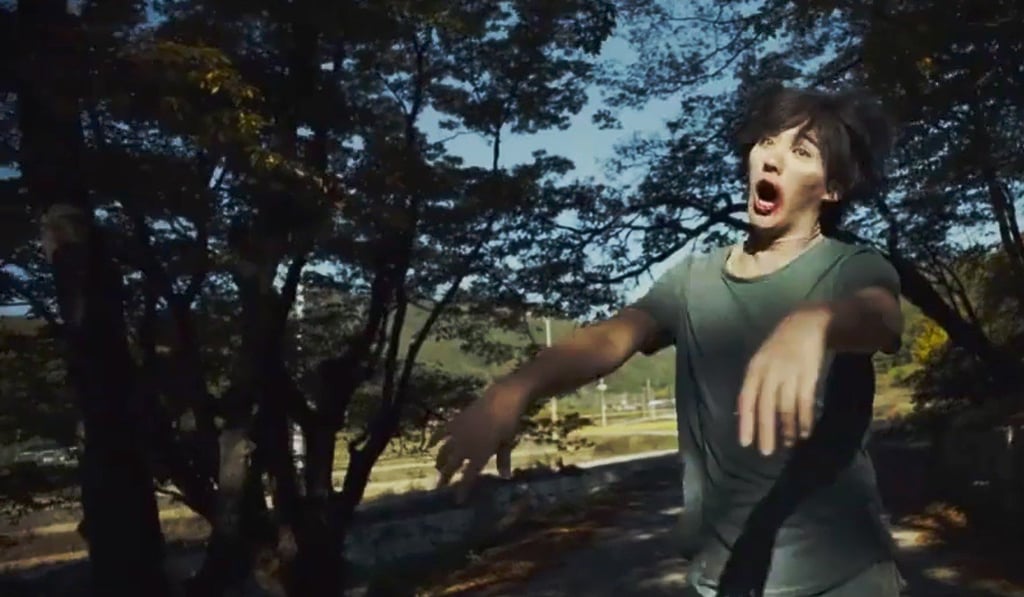
What follows is a silly, entertaining, and at times cringe-inducing story where the quiet village is turned upside down and the undead battle in the street. Or, at least, that is what most viewers see. Keener eyes observe in The Odd Family and its predecessors like 2016’s runaway smash hit Train to Busan something deeper – metaphors for everyday life, class divisions and government ineptitude.
In Train to Busan , in which zombies take over a train on South Korea’s high-speed rail system, passengers – including the main character played by heartthrob Gong Yoo – soon learn they can rely only on themselves as help from the authorities is not forthcoming and the government is covering up the truth. Its storyline has been widely interpreted as a veiled criticism of Seoul’s handling of disasters, especially a tragic ferry sinking in 2014 and an outbreak of the Mers virus the following year.