What tea goes with wok-fried wagyu beef? Ask Hong Kong’s first tea sommelier Kelvin Ng

Ng provides premium options for guests from his visits to China several times a year
Hong Kong’s first tea sommelier Kelvin Ng has worked at two Michelin-star Yan Toh Heen for seven years and as tea sommelier for four. “When I was young, I always liked to drink tea, and it became my hobby and interest to discover more about tea,” Ng says. He was able to discern a great tea from a good tea, so when he started working at Yan Toh Heen, he realised that the tea they were serving was not at the required standard for a luxury restaurant.
“Every fine-dining restaurant in Hong Kong is sourcing from one or two suppliers, so the tea leaves and their quality are the same,” he says. “I mentioned it to the management and suggested Yan Toh Heen source from smaller tea shops that make better-quality tea leaves - and so we began to change the tea menu and provide premium options for the guests.”
“Some of the tea trees we use can only supply one to two kilograms of tea leaves,” says Ng, who goes to China several times a year in search of premium teas. During a recent tea pairing menu at Yan Toh Heen, he served 30-year pure dry, warehouse-aged pu’er tea and Bing Dao raw pu’er tea, the latter from a 1,000-year-old tree. “It’s hard to find a tea tree over 1,000 years old, and one tree can only produce a maximum of two kilograms of leaves a year,” he says. “This tea, from Yunnan province, is known as the first tea picked from the new spring crop - the very best time of year to pick tea is between March and early April. This particular tea resembles green tea with a light refreshing taste.”
I suggested Yan Toh Heen source from smaller tea shops that make better quality tea leaves - and so we began to change the tea menu and provide premium options for the guests
Ng’s favourite tea though, is the 30-year-old pure dry, warehouse-aged pu’er tea. “You can drink it at the beginning and end of a meal and it still has the same flavour. It’s hard to find a pu’er that’s like that - the flavour doesn’t weaken,” he says. “This is from a 100-year-old tree. After picking, the leaves are dried and stored in Hong Kong for over 30 years.
Tea masters view this tea as very good, so they buy and bring it to Hong Kong and store in a warehouse in 20-28 degrees Celsius for 30 years. It can keep on fermenting - sometimes the tea master puts it in a wet place in the summer to let it ferment faster, but the quality and character will change as it’s not natural.”
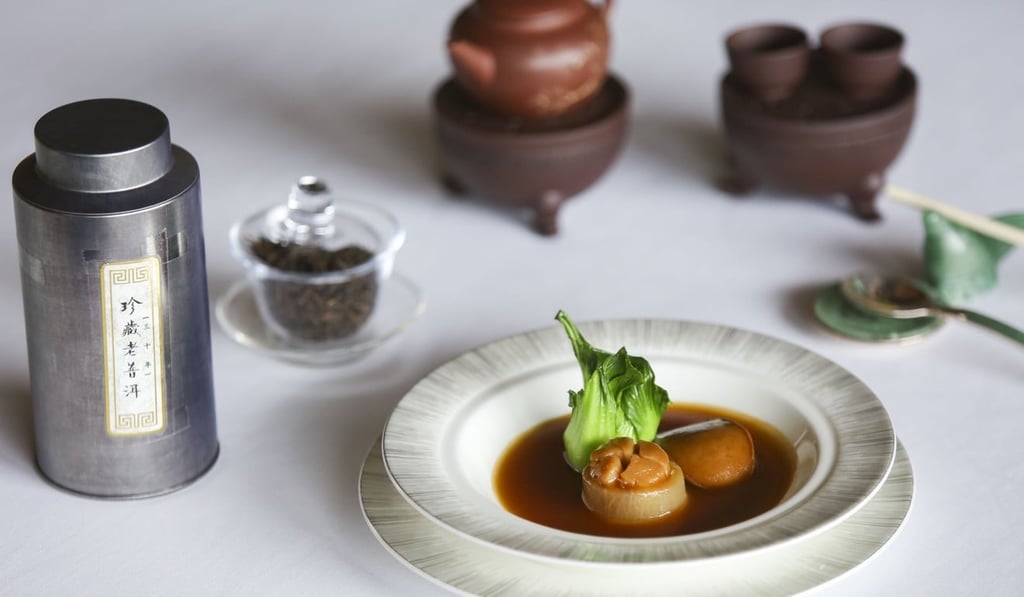
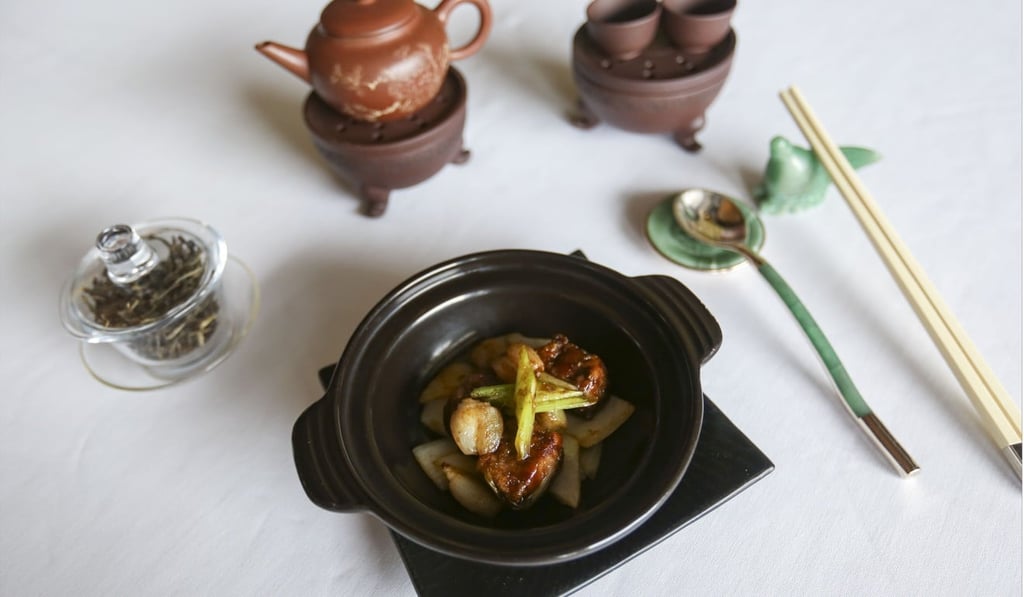
Ng is getting ready for the next precious tea pairing menu on Father’s Day where he will pair a rare 1970s Lu Boa Guanxi tea in a gala dinner menu. He will offer another tea pairing menu in September.