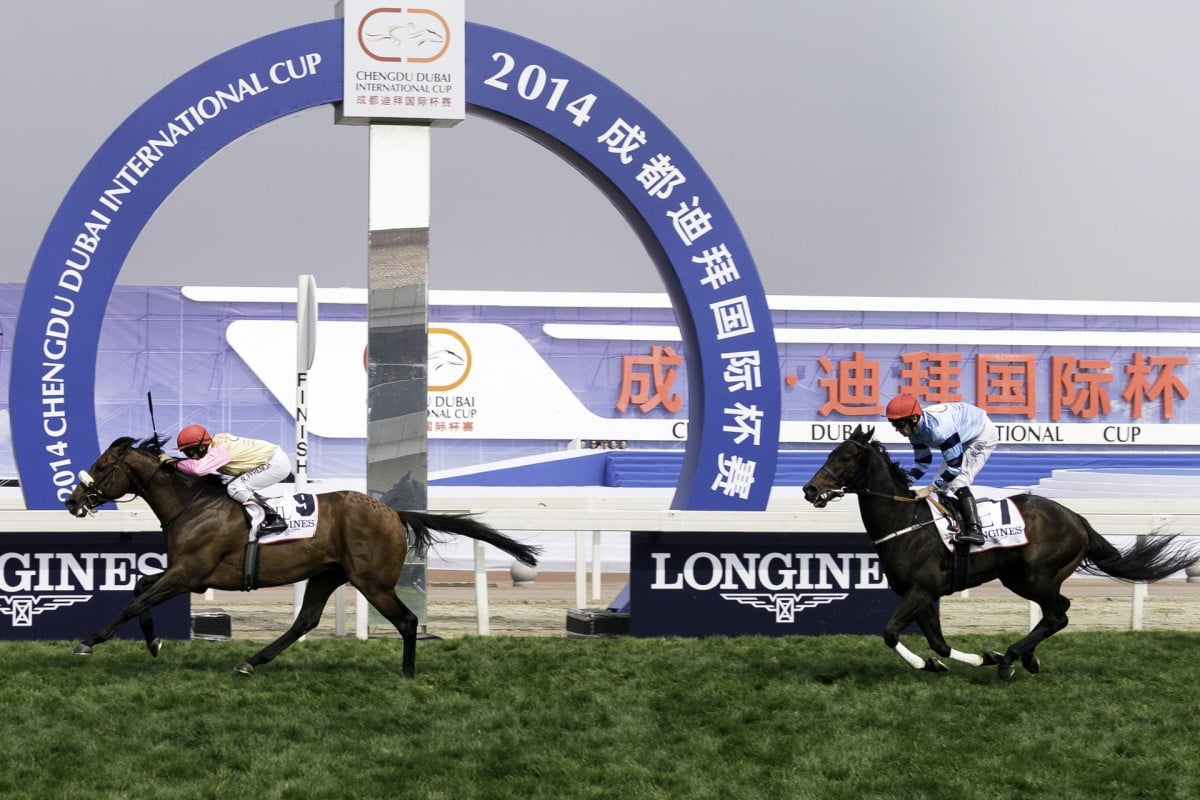
A race meeting in Chengdu district last weekend was not the giant leap many crave when it comes to racing on the mainland, but even sceptics acknowledge it marked an important first step in conquering what is seen as the final frontier for the sport.
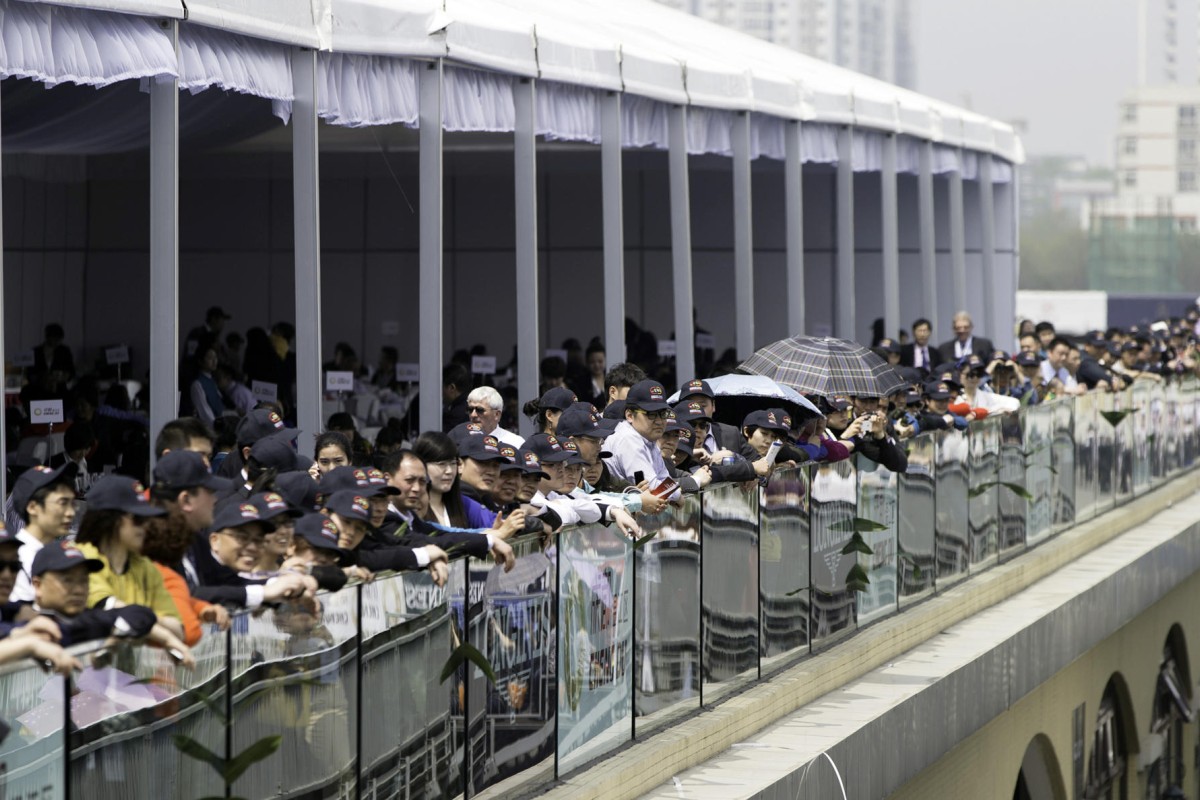
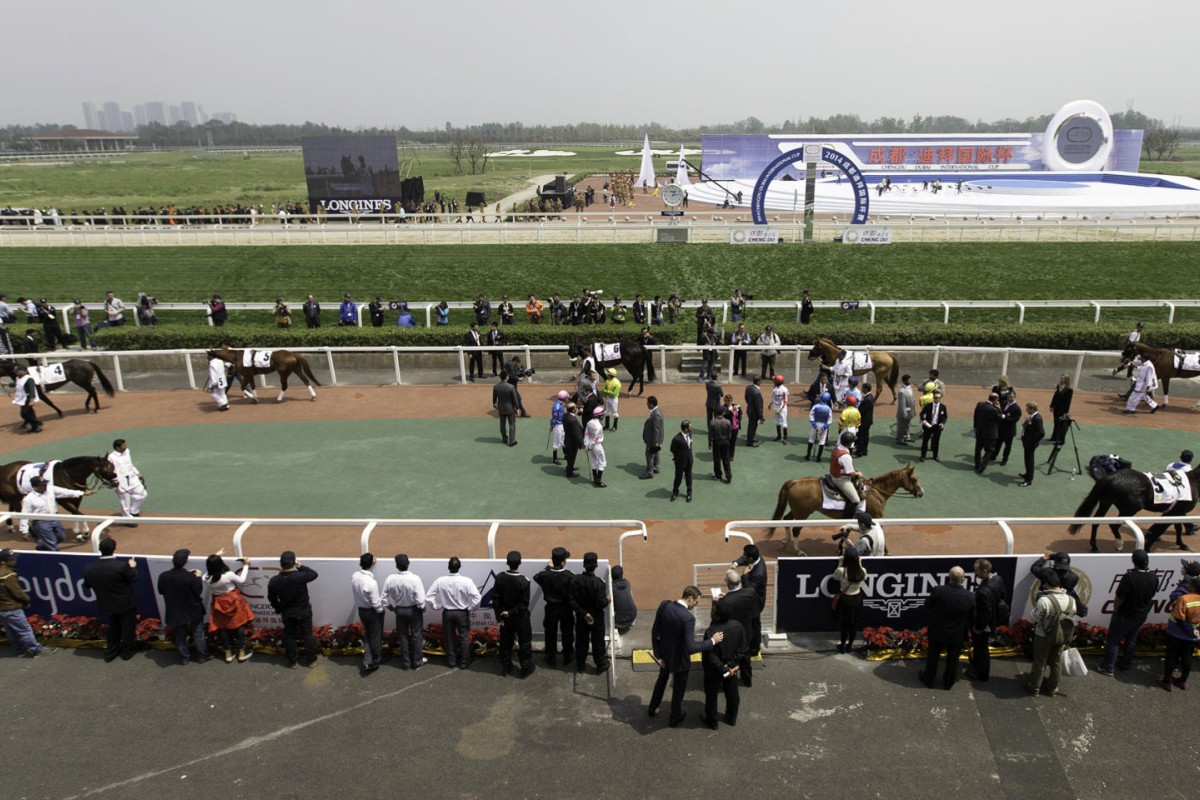
Forty-eight horses were flown in for five races on a newly upgraded turf track at Jinma Racecourse in Wenjiang, Sichuan province. The feature race was worth 1.5 million yuan (HK$1.9 million) and an estimated 5,000 spectators turned up for what was, by all reports, a professionally run fixture. Importantly, the horses flew back out, too, and returned safely home - believed to be a first when it comes to a mainland race meeting.
The event was funded by Dubai's ruler, Sheikh Mohammed bin Rashid Al-Maktoum's Meydan Corporation, and was essentially a Dubai Race Club meeting transplanted from his desert base eight days after the club ran the world's richest meeting, including the US$10 million Dubai World Cup.

"I hope we have made an impact and made a step forward to the growth of China racing," said Dubai Race Club executive director of racing Frank Gabriel, whose final task before departing his job was to oversee the fixture - the culmination of a two-year-long effort.
"We sent 110 staff to operate the meeting under Emirates Racing Authority rules. Stewards, vets, farriers and starters - we had every person we needed as a regulatory body. It is the intention from everyone at the Asian Racing Federation and International Federation of Horseracing Authorities to grow international racing and we all want to make sure China is a new growth area.
"We were just doing our part, but we did it a little bit differently. We wanted to make sure we felt it would be best for the safety and care of the horses. Basically that meant to us, bringing the horses into the country and taking them home."
Quarantine issues were the major obstacles - and the main reason the meeting was twice postponed. It was originally set down for October, and then moved from December until after the World Cup meeting.
Organisers are hoping the set of horse movement protocols hammered out for the day can provide a blueprint for the future and "open the door" to the rest of the racing world.
"It's not just a door for us, it's a door for international racing," Gabriel said. "The protocol is there now and we hope to repeat it each year. The next growth is international horses from different foreign countries. That's going to take time, more discussions and more facilities."
For horses to travel between countries, an agreement needs to be ratified by the OIE - the World Organisation for Animal Health - something that can be achieved much quicker, as one cynic put it, "when the agreement is between two dictatorships".
Hong Kong Jockey Club chief executive and IFHA vice-chairman Winfried Engelbrecht-Bresges applauded the Chengdu venture's breakthrough with regards to the quarantine arrangement, but warned there was a long way to go before racing can grow on the mainland. "There are a lot of one-off events in China, but the question is whether they are sustainable," he said. "It is good to have these showcase events - to show the quality of racing and what it is all about - but it's not a huge breakthrough.
"The quarantine protocol is still a temporary arrangement. Moving to a more regular offering is a different step - things like equine medication, horse feed. For one event you can bring these things in, but for regular racing you need agreements with government and to have licensing and drug control. At the moment these are all city-by-city events."
Engelbrecht-Bresges is a tireless advocate for reducing travel restrictions for racehorses in his negotiations with the OIE, and has broken down barriers in that area. He believes further progress can be made at the Asian Racing Conference early next month where "movement of horses" will be the topic of a seminar.
Whenever that billion-dollar question "when will racing in China start?" is asked by racing people the world over, the answer should be: "there already is racing on the mainland and it never stopped".
There is thoroughbred racing, but just not as we know it in gambling-mad Hong Kong, where soaring turnover drives a professionally run operation. Since betting on horse racing was outlawed by Chairman Mao Zedong in 1949, the sport has been for the most part disorganised and lacking the stability and focus a single governing body can provide.
In the modern era, progress is not only hamstrung by the issues relating to quarantine - there's still that "G" word. Gambling is the lifeblood of any sustainable version of the sport, the lack of which relegates any attempts to build racetracks and run regular meetings to a mere pastime for rich enthusiasts.
Gambling isn't an issue for the oil-rich Sheikh Mohammed - there is no gambling in his country - but the sport isn't a hobby there either and Gabriel believes the non-gambling ideology helped the club move into the joint venture with Chengdu's local authorities with a fresh mindset. "That's the model we use here - so maybe we were one group that knew how to operate without gambling in mind," he said. "Is that the business model available in horse racing? Maybe not, but at the end of the day, that's what we have to deal with so we were able to share that."
Whether racing ever reaches that holy grail of wager-funded racing on the mainland is something out of the control of even the most powerful administrators, and firmly centred in Beijing. It is something that doesn't look likely in the current political climate. Something Gabriel and Engelbrecht-Bresges both stress is that, regardless of what model racing operates under, a single governing body is required to run the sport.
"If you want to have real racing development you need a governing body - the solid framework you have in racing jurisdictions," Engelbrecht-Bresges said, adding that the Asian Racing Conference will help provide a snapshot of where racing in China has been, is now, and most importantly, is headed.
"We can talk about how to make the sport more sustainable and what the next step should be for us to consider," he said. "We will have a speaker from China's sports administration, and a speaker from the sports administration in charge of equine sports and they can explain what their position is in relation to future development. We also have an expert who will report on the experience of other industries. We can look at what would be necessary from a policy perspective to help racing to grow."