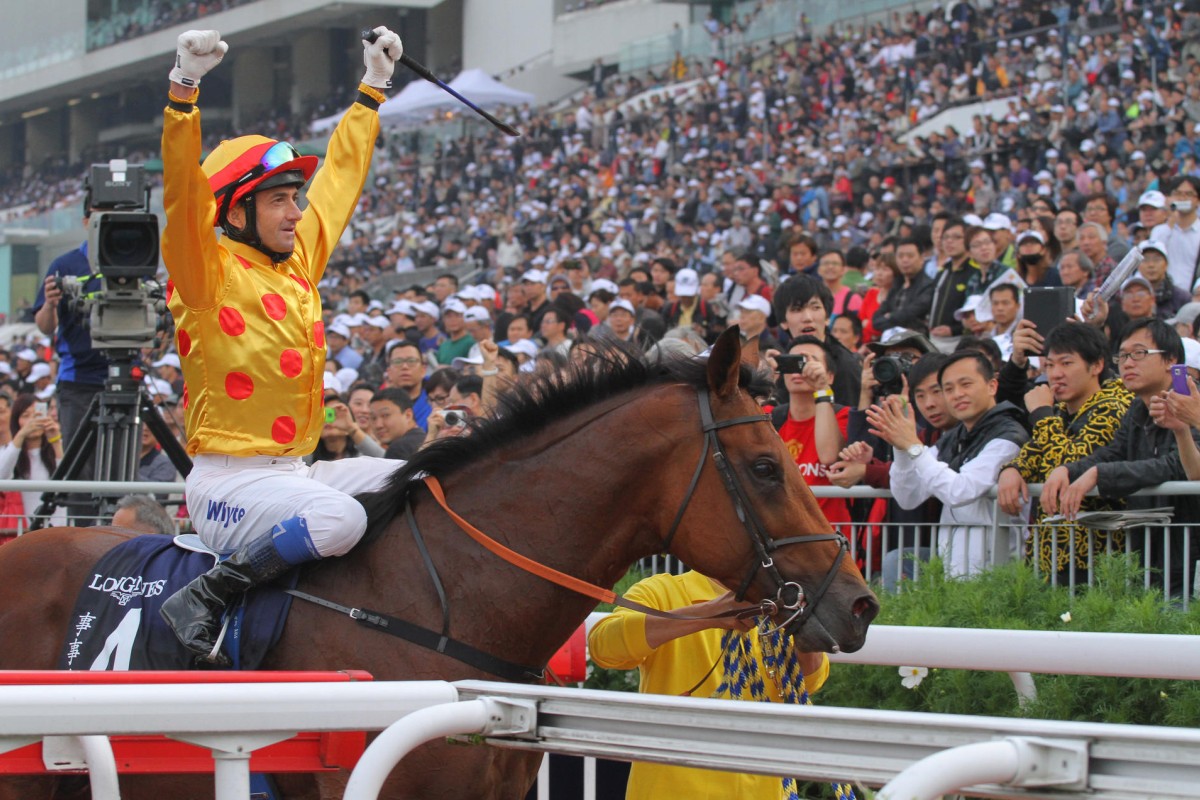
Any young journalist learns it early - dog bites man, no story. Man bites dog, now there's your yarn. And, in the racing season that winds up today, it was champion jockey Douglas Whyte who sank his molars deep into something canine.
It may be a sorry comment on human nature but Whyte working and wasting and building and networking and navigating his way, over a tough 10 months of every year, to stand triumphant at the top of a glittering list of jockeys had become a non-story.
That's how dominant the 42-year-old South African had become in his 13-season reign. Whyte was the sun rising in the east, the Northern Star, night following day. The one constant underpinning racing's notoriously fluctuating fortunes.
Only in defeat have Whyte's championship aspirations become news again but he displays a surprising lack of disappointment or emotion, at least outwardly. There is no suicide watch, no search party out. Whyte has always conducted his business behind an exterior not dissimilar to the cool, matter-of-fact detachment of tennis great Roger Federer.
"I've always known this day would come, of course," says Whyte. "I've had a phenomenal run. When I won the first time, I never imagined I would win it for the next 13 years.
"Of course, I would have liked to be the champion jockey again, but it might surprise people that I'm not disappointed. The title isn't the only issue. I've had a fantastic year. No premiership this time but I've won a lot of races, some of the biggest races, and my prizemoney is one of the best years I've ever had."
When the season kicked off last September, Whyte said there were no special advantages in a championship win that made the next one any easier.
"It's the same in any sport anywhere in the world," Whyte said. "If you wear the yellow jersey in the Tour de France you are a marked man. And being champion 13 straight times doesn't make it any easier, that's for sure - it makes it far more difficult."
He'd said the same thing - only the number changed - every year since 2001, but this time he was right. And to some extent, for this yellow-jersey bearer, it was about the bike.
The elephant in the room has been the vanishing act of the Dream Team of Whyte and top trainer John Size. But Whyte had made it to the fourth of his championships in 2004 without Size - just two wins from nine rides and one of those a random draw in an international jockeys' championship at Happy Valley.

That timing also signalled the third trainers' title from as many attempts for Size and the Dream Team became what happens when the irresistible force and immovable object are on the same side.
Until now. Last season, 214 rides for Size and 50 winners. This season, only 50 rides. And Whyte's wins have been spread democratically, largely across six or seven yards.
Whyte concedes that losing the Australian's automatic and unlimited support made a sizeable difference, but both he and the trainer would make a Trappist monk look chatty when it comes to elaborating.
"It's not something I'm willing to discuss," says Whyte, and the elephant in the room looks to have taken up permanent residence.
Size still gave Whyte his biggest win, the Hong Kong Mile on Glorious Days, until Richard Gibson-trained Akeed Mofeed eclipsed even that feat 30 minutes later in the Cup.
Together, those international successes helped Whyte to almost HK$105 million in stake money earned by his mounts, and along the way the Durban Demon celebrated more milestones to toss into the sprawling space that must house such things: his 1,600th winner in Hong Kong, his 10,000th ride - a winner - and his career stake earnings here went past HK$1.3 billion. And there's more to come.
The jockey dismisses any sense he was holding on here, and putting other ambitions in other places on the back burner, just to maintain a streak that probably won't ever be bettered.

"I've no desire to leave Hong Kong. This is home and because I got beaten one year doesn't mean I'd leave. I'm going nowhere," he says.
"I'll be back next season doing my best. Not winning the championship was not some signal that I'm done. I've been around long enough to know that a defeat can make you better and stronger."
In addition to the disbanding of the Dream Team, Whyte's ability to fight back when Zac Purton had the ascendancy was also hoppled by the appearance of Joao Moreira. Hong Kong racing was no longer binary - a choice for owners and trainers between Purton and Whyte. There was a third arrow, and the premium rides were spread out further.
"Joao turning up has been good for competition and he has been a natural first choice for some owners," Whyte says. "He's been well supported and certainly made things more interesting on the track."
But competition has always been Popeye's spinach to Whyte. When he narrowly touched off Brett Prebble in one epic championship race his then arch-rival said he could not believe how much Whyte wanted victory.
"I'm always fired up. I never lack competitiveness and I wouldn't say that being beaten will make me any more competitive - but let me put it this way, I definitely won't be any less competitive as a result of it," Whyte said.
"Because I won the championship for so long, there was this kind of expectation that I would just keep winning, but this is a tight, handicap environment and everything is very competitive. It's tough. It's a lot of work and staying focused and consistent. It's not just a matter of turning up.
"Congratulations to Zac. He's had a great year. It really is a lot of work to win a championship and, if he says that seeing how hard I worked for it rubbed off on him and made him work harder, then good luck to him."
When Whyte and Purton publicly exchanged barbs this time last year, after Whyte had prevailed in that battle, the South African warned him not to put his hand in the beehive.
Now his warning for Purton might take a different tack, a line that Whyte has known well and uttered often in the past on the heaviness of the crown: "To get there was a tough job in itself. But to remain there has taken much more effort."