As the signal crackled through the AM transistor radio speaker in a Sydney suburban backyard on a Saturday afternoon in spring, the voice still sounded clear and distinct - it was the dulcet tones of Melbourne's iconic race caller, Bill Collins.
"Our Waverley Star will want to be Phar Lap, and here's Bonecrusher, he's pulled to the outside shooting around them and Our Waverley Star is going with it …"
To an outsider, an Australian horse racing commentator's rapid-fire and sometimes emotional delivery must sound like a cross between an enthusiastic auctioneer and a preacher from a Pentecostal church.
For a teenaged Darren Flindell, the effect of that voice had a revelatory effect.
"Here come the New Zealanders, Our Waverley Star and Bonecrusher, they've raced to the front 600 out, have they gone too early? … The two great New Zealanders have come away on the turn, Our Waverley Star, a half length Bonecrusher - the Big Red won't give in … Bonecrusher responds to the whip, to the roars of the crowd, he races up to Our Waverley Star 100 out, Bonecrusher, Our Waverley Star, stride-for-stride, there's nothing in it. Our Waverley Star the rails, Bonecrusher the outside - and Bonecrusher races into equine immortality!"
As Collins' delivery reached dramatic crescendos in races like the 1986 Cox Plate, Flindell found his own true calling.
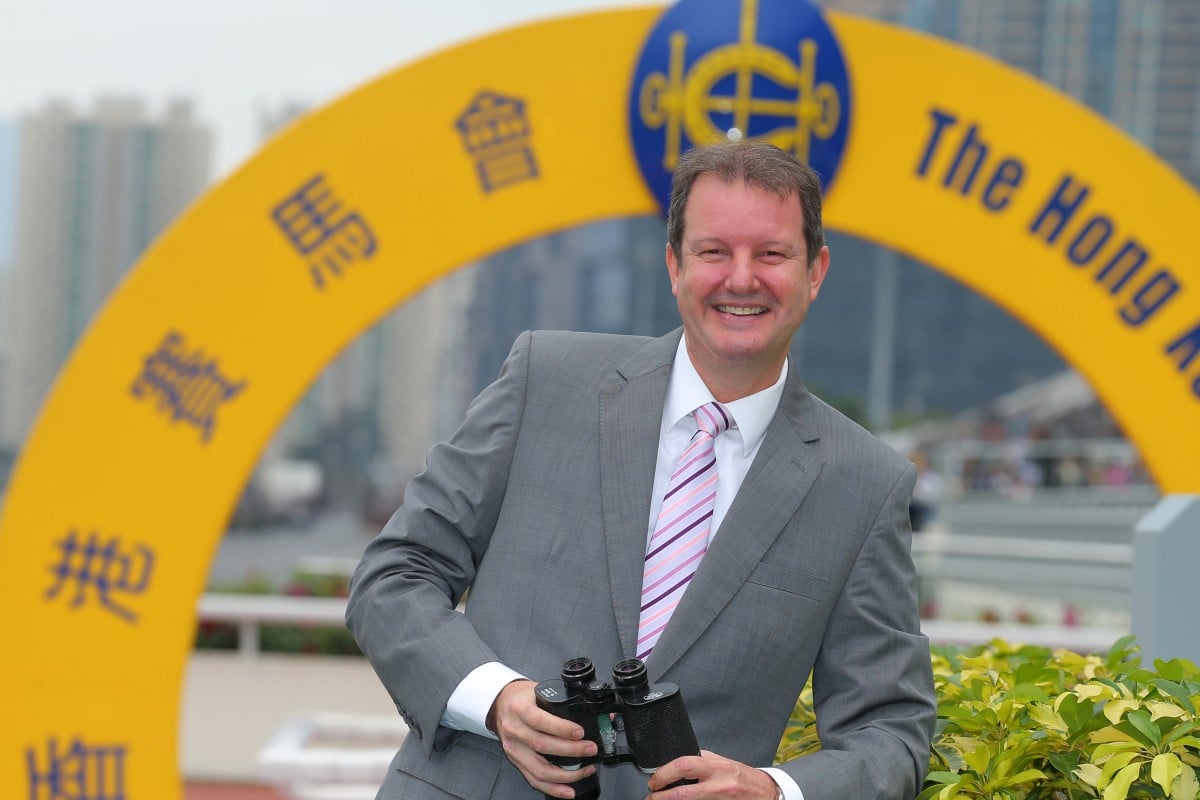
"It used to give me goosebumps listening to it," recalled Flindell last Sunday, as he sat in the Sha Tin caller's box for the penultimate time. "The Sydney caller at the time, Ian Craig, was someone I loved listening to as well, but it was Collins' voice that really grabbed me. When I heard him, I thought, 'Yeah, I'd like to do something like this'."
There is no such thing as a "school of race calling" - although Flindell's education as a sports broadcaster did begin there, at school that is, and the development of his craft mostly revolved around the old-fashioned art of truancy.
First came a high-school assignment, where Flindell and a friend commentated on rugby league games: "We just took a tape recorder, sat on the hill amongst the fans and called the game - driving everybody around us absolutely nuts."
Then came Flindell's show-stopping role in a high school play, using teachers' names in a phantom horse-race call. The performance was met with such a rapturous response that it spurred Flindell on.
It was on Wednesday afternoons from then that Flindell, like clockwork, would "fall ill" at lunchtime, and then spend the afternoon in a sparsely populated grandstand at Canterbury racecourse with his trusty tape recorder, honing his craft.
"The only problem was that the school's truant officer was a mad gambler - he would appear at Canterbury as well and I would get busted," Flindell said.
"From there, I moved from calling on the roof of the grandstand, to getting some keys to unused boxes at other tracks and kept practising and sending my tapes off to radio stations. There were some pretty unfavourable responses at first."

It is a long road from practising alone in abandoned commentary boxes and calling greyhounds at quirky courses like Moss Vale, in the New South Wales southern highlands, to the high-voltage atmosphere of a big Sha Tin race day.
"I had a few breaks and became a presenter on SKY racing, but throughout my 20s I wasn't calling racing much in the end. I was knocked back for a job in Singapore, but then I was recommended here and got the position as back-up to David Raphael," he said.
Like many who head to Hong Kong, it took a huge leap of faith from the then-30-year-old. "I had a house in Sydney, but there wasn't much liquid cash when I came. I had about A$300 in my pocket, I had to borrow some money off my grandfather," he said. "And there was a lot of doubt in my mind."
Flindell's nervous start was helped by the fact the Jockey Club's now international sale manager, Mark Richards, began as a presenter in the same week, and, with the assistance of former producer Nuno Fernandes, the new on-air team immediately hit it off, producing lively banter on a preview show that made it cult late-night viewing.
"We clicked straight away and became great mates," Richards said. "But we would really get stuck into each other on air. Then when we would go for a beer afterwards and people would say: 'Wait a minute, you two actually speak to each other and get along?'"
What Flindell will miss most about calling in Hong Kong is the crowds, intense public focus and racecourse atmosphere.
"In Australia, my generation missed out on the golden era of racing, when racecourses were jam-packed - but here you get an idea of what it might have been like back in those days. And the racing itself is so competitive that there are a lot of close finishes and it takes you to another level as a caller."

What Flindell won't miss are absurd Hong Kong horse names. "It's the stupid and nonsensical names that frustrate you the most, it's hard to remember. Then there are ones that are so stupid it is impossible to forget them."
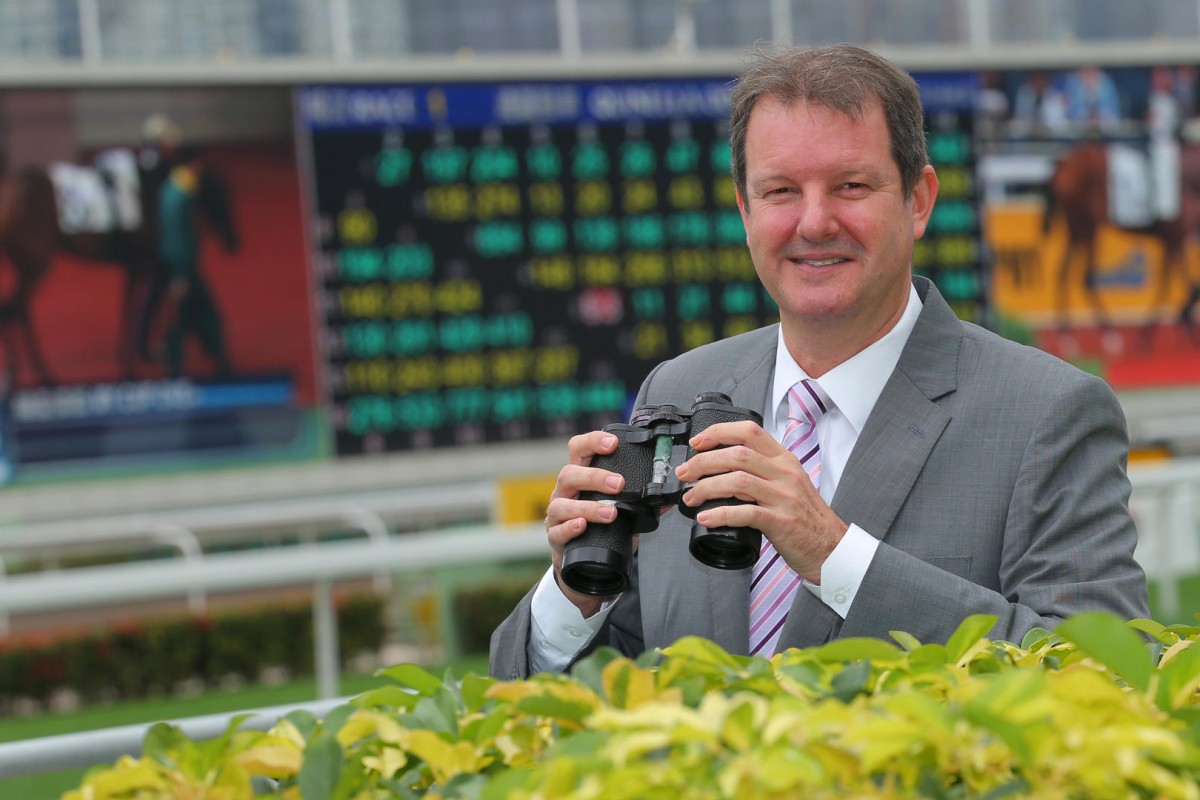
Now, as the broadcaster colleague Clint Hutchison refers to as "the best in the business" prepares to call at Sha Tin for the final time at today's BMW Hong Kong Derby meeting, Flindell reflects on close to 16 years that have gone in a flash.
His career has come full circle and he has received another calling, to return home and occupy the seat formerly filled by his one-time mentor, Craig. It is starting to sink in that the voice resonating from the radio as Sydney's number-one caller will now be his.
"I'll miss calling Able Friend, today might be my last opportunity to call him, and although calling The Championships is a great way to start down there, I am very anxious about calling the Golden Slipper because there will be multiple Godolphin runners there, all wearing blue silks and only differentiated by different coloured caps. If one of those caps blows off, I am in trouble.
"It is truly going to be the greatest test of my career. I'll be feeling the pressure, but to use old racing parlance, if I take my Hong Kong form, there I'll be fine."