Putting the next brick in the construction of China racing on Sunday, the Jockey Club might just have found the right way to enhance the appeal of the December international meeting in a fashion which has been difficult to achieve on racing merit alone.
Several years ago, chief executive Winfried Engelbrecht-Bresges identified adding breeding value as the next phase for the Hong Kong International Races after a certain general acknowledgment that the meeting did now feature a high level of competition.
The task then was to have not just a certain kind of top-level racehorse whose connections were sports happy to roll the dice on overseas assignments, or owners with an eye on the lovely stake money on offer. The final phase was to attract those horses to whose connections the stake money was a secondary consideration and the thrill of having to be in it to win it was not even that - to attract the world's biggest owner-breeders with their absolute best horses.
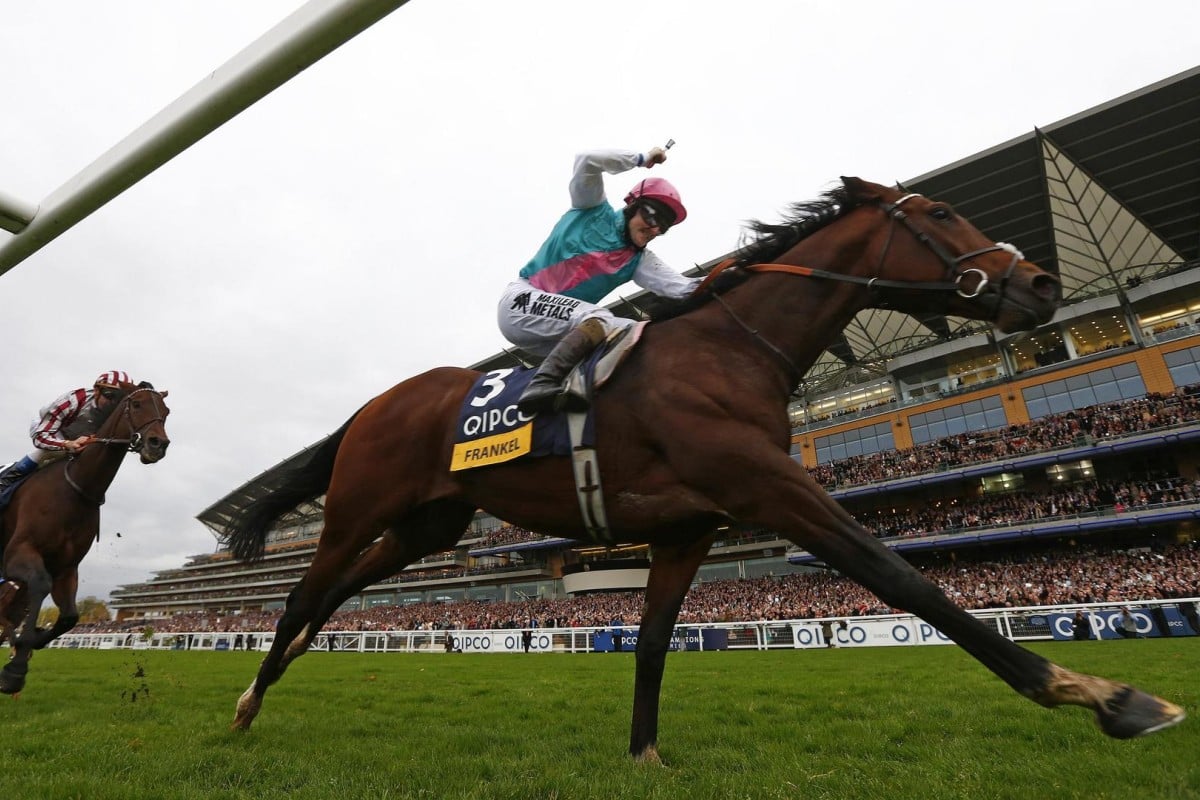
The problem with it was that a Frankel, just for example, had so much more to lose in Hong Kong than to win. Victory didn't enhance his standing, defeat would damage it and then there were the usual dangers of long distance to an unfamiliar environment to consider.

The Breeders' Cup in the United States was a creation by breeders, for breeders as a showcase for the best and it instantly had cachet in terms of adding value to post-racing careers of stallions and mares. That necessarily demanded the participation of the monolithic European breeders if they expected to sell horses to the US or stand stallions there.
Hong Kong's international meeting, by comparison, was a test-tube baby. It began with relatively low performance ceilings on overseas visitors, gradually raised as local standards also rose, albeit lagging the foreign visitors for many years.
Even when the restrictions were removed, there was a sense that the Hong Kong internationals were, to foreign jurisdictions, the stage for your second-tier runners, perhaps your star globetrotting gelding, but rarely your multiple Group One-winning glamour stallion prospect. For him, the equation usually didn't make much sense.
Despite HKIR in the past decade or so attracting more of the world's largest breeders and the stallion types they run, there are still more of the very best of those which would stay home rather than run here.

Jockey Club officials are certain that a breeding industry will flourish in China long before gambling on races gets much of a hearing - and so are the biggest of the breeders. They've told us that themselves by Coolmore dipping its toe in various Chinese racing and breeding ponds, by Sheikh Mohammed bin Rashid al Maktoum's Chengdu meeting last year, and the nations and companies in the business of selling thoroughbreds are never too far away from even the least promising equine developments on the mainland.
The growth of a functioning breeding industry - a legal kind of gambling on horseracing for the newly moneyed - could take place quickly. All that takes is land and money and there are people there with enough of both to be world players, at least on the buying side at first.
Just Hong Kong's proximity and cultural ties would ensure a great deal of face in having breeding stock in China with blood ties to what happens here in the international races or the Derby. That becomes a circle, virtuous or sometimes vicious, however it plays out, to drive prices and give HKIR the final piece of its evolution from rich novelty to stallion maker.
Look to lack of rain when trying to make sense of time
Perhaps we spend way too much time staring at race form and times and video replays but has anyone else been intrigued by times at Happy Valley so far this season? No?
Too bad, it’s going in anyway.
At this stage of the season, race times are usually faster than the standards at both turf tracks and Sha Tin is holding up its piece of the bargain.
At Happy Valley, though, times have been consistently slower than standard at both meetings conducted for the season to date and the pattern seems likely to continue on Wednesday.

We consulted John “Master Of The Climate” Ridley on the matter and the director of racing operations came up with an explanation, and it is all about rain, or a lack of it.
In most places, more rain usually makes times slower, but we often see at Happy Valley (and Sha Tin for that matter) that times are sizzling after rain in the days before a race meeting.
Well, no rain, or a lot less of it than usual, has left Happy Valley “like running on a mattress” according to Ridley. He said the top surface of the track is still firm enough, but the rain is necessary to compact the track beneath the surface and this has not happened in a comparatively dry August-September period, leaving a big cushion zone beneath the turf.
The value of taking a break
Field sizes at the early meetings have shown again that there is a price to pay when the summer break is reduced and it would certainly become a serious consideration if ever the break was cut back even more.
There is a correlation between field sizes and turnover, and there is a correlation between the depth of fields and turnover and a lack of both field size and depth has been apparent so far.

Quite a few of the fields that went around last Saturday were undersubscribed and modest contests, to say the least, as well and assisted the club to a rare turnover dip that was not too surprising, particularly in the current economic climate.
With the 2014-15 season starting a week later, it also finished a week later and then this term began at a more normal point in the calendar, thus slicing two weeks off the break.
John Moore spelt it out after winning with Sure Peace on the weekend, just his fifth runner for the term: to have his horses ready to go again at the start of the new season could only have happened if there were no break at all or he hurried them to the races before they were ready.
And he isn’t the only trainer to have taken that view, judging by some participation levels in the early meetings, although things should start to normalise as we get into early October next week.