INFOGRAPHIC: CLICK HERE TO RELIVE 'MAGIC MAN' JOAO MOREIRA'S RECORD 145 WINNERS IN 2014-15
The Jockey Club will expand its global footprint and look north towards significant co-operation with the powers underpinning the emergence of racing in China after a record-breaking season.
New high-tide marks were left across the board by the 2014-15 season, whether in terms of wagering, commingling, tax paid or the achievements of participants on the track.
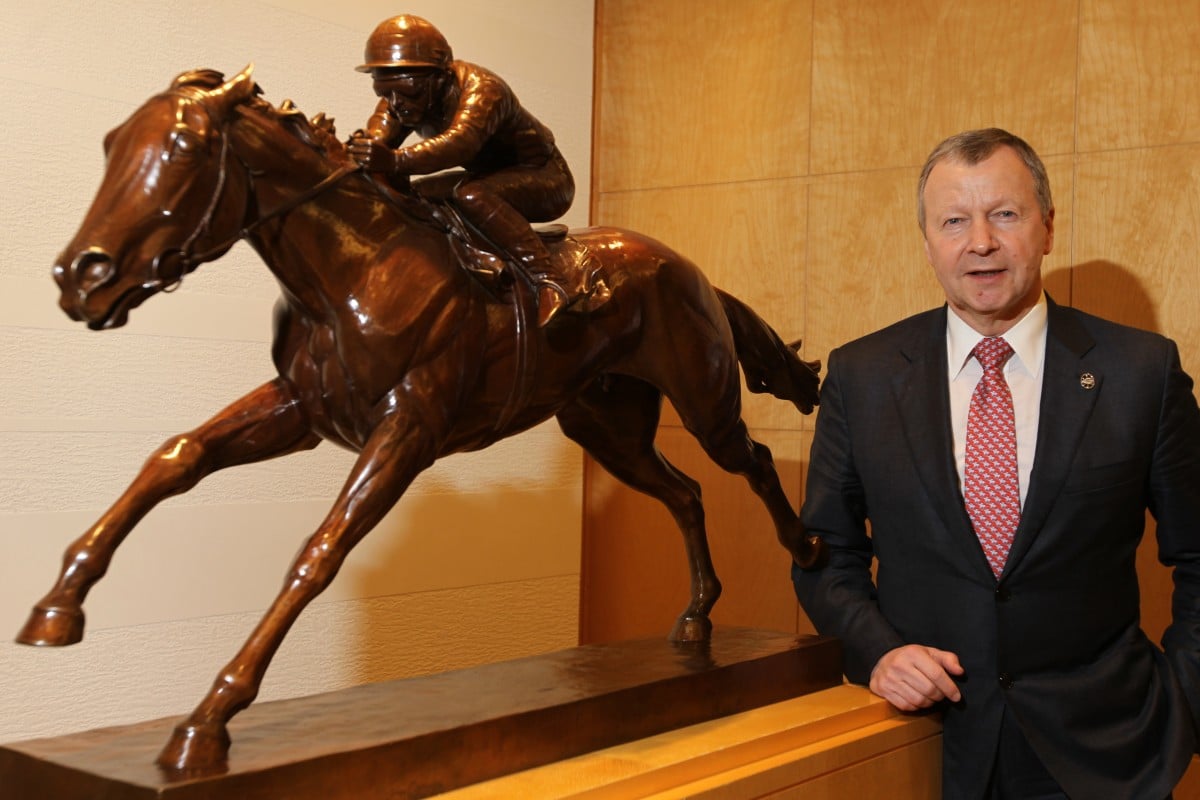
Chief executive Winfried Engelbrecht-Bresges said he could not have imagined a more appropriate celebration of the club's 130th anniversary year. "Even in my wildest dreams I wouldn't think that we could have achieved all that we did," he said.
"Look at the betting figures [HK$107.9 billion, up 5.8 per cent], the quality of our best horses and races - so many of them acknowledged amongst the world's elite listings - and the achievements of our participants.

"I don't know if a trainer anywhere made the prize money that John Moore did - US$18 million in Hong Kong alone. And Joao Moreira's prize money of US$26 million from only 700 rides, I believe only Javier Castellano in 2013 [in the United States] has bettered that and he needed 1,600 rides."
The headline prospect for 2015-16 is the Jockey Club's growing connection with the conception of racing on the mainland. The club has assisted the China Sports Lottery with software and risk management, but co-operation turns now more towards the grass roots of an actual racing industry of the future.
"We have new strategic relationships with the two likely stakeholders in the game - the China Equestrian Association [CEA], which comes under general sports administration, and the China Horseracing Industry Association [CHIA], under the supervision of the Ministry of Agriculture," Engelbrecht-Bresges said.

"With the CHIA, we are assisting in areas such as studbook, registration, drug testing capabilities. For example, last year there were 600 to 800 thoroughbreds imported to China but not registered, so we are discussing how we can help with this process, which must be fundamental for the sport and its integrity."
The relationship with the CEA is a strategic agreement to help build administration capabilities, such as training of stewards or other participants, track management, entry systems and the many processes that go into staging a successful race meeting.
"And part of that will be co-operation with the CEA for the race meeting at Chengdu on November 7," the chief executive said. "We will help on the technical but also the business side, like sponsorship, marketing and how to generate income streams from the meeting when the traditional revenue stream of betting is not available."
Engelbrecht-Bresges is also expecting rapid advancement of Conghua, the club's training centre in Guangdong.

"Conghua is a key growth component for the club. It will enable us to expand our horse population and keep up with demand from owners, who are now waiting up to five years for permits. Conghua starts construction in November, to finish in late 2017 and be ready for a soft opening in the second quarter of 2018," he said.
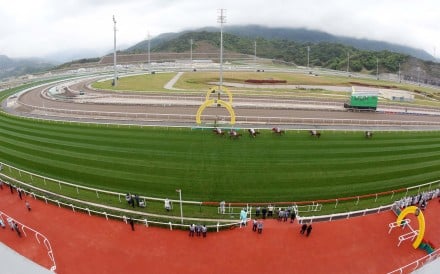
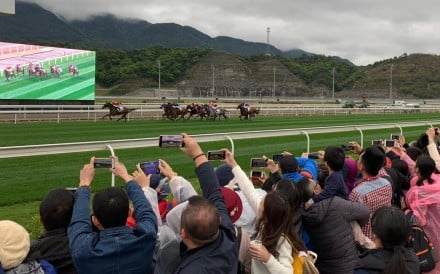
At home, the Olympic stables equine pool will be built by April and another HK$710 million spent on venues and infrastructure as part of the "Master Plan", which continued to bear fruit with a 2.6 per cent rise in attendance this season to more than two million.
More commingling lies ahead as Australia's most populous state, New South Wales, joins from September and Engelbrecht-Bresges says commingling is a growth area where others might be slowing and a profile component of the club's showpiece Longines Hong Kong International Races (HKIR).
"HKIR is now firmly established, but we want to take it to the next level as not only an international race meeting, but a must-go travel event. We want to beef up the whole week as an event, not only the Sunday."