Hong Kong racing surely won't ever offer up a less competitive day than last Sunday at Sha Tin, where the no-hopers in some races thoroughly outnumbered the actual chances.
The gut feeling we've had through the middle of the season has been that way too many horses short in the market have been winning. It's a feeling which has probably been driven by seeing so many horses clobbered late as a proportion of the illegal money comes back to the legal pools.
The statistics don't support the gut feeling. Standard for horses winning at odds of $110 or less has been 80 per cent in recent years, which has steadily crept up from 75 per cent at the turn of the century but we put that down to the improved information and form analysis of you and your ilk, dear reader. But why do the 80 per cent of winners that are under 11.0 seem more "under" that price than they used to be?
Then we wondered if the dominance of three jockeys instead of the usual two had anything to do with it. When you look at the rawest of raw stats for Joao Moreira, Zac Purton and Douglas Whyte, it seems like maybe form study hasn't improved - punters are just backing one of these three. Each of the three is filling a 1-2-3 placing at more than 40 per cent of his rides, to go along with them collectively winning more than 47 per cent of the races. Blind faith could be narrowing down the fields in an artificial but seriously effective way.
And then a day like Sunday comes along and the penny drops - what has happened to the days when racing was more competitive? We might have regular fields of 14 still but gee there are a lot of runners which are just speed bumps there to get in the way of the favourites - and the top jockeys seem to be skilful enough to dodge them more often than not or they are just staying out of the way.
Once again we are having a season in which the average favourite price is running on the tighter side of history and cards full of 100-1 chances are making it possible. The third race on the weekend had 14 runners - five of them winning chances under 11.0 and six that were over 170-1, and that seems to be the direction we are heading.
The final race was uncompetitive in the market place, as well as tactically, with four horses under 7.0 - which proceeded to run 1-2-3-4 - and just one other runner under 50-1. In a totalisator environment, it has to be accepted that punters gravitate to the best winning chances, driving down their prices and collectively feeling like they have the race result surrounded.
 What seems to be happening more and more now, including the late stompers, is that they are absolutely right to think they have the race nailed.
There is a lack of middle market - there are the have-a-chances and the have-no-chances and not a lot in between. Does it mean something sinister, like we have reached the point where most of the fringe players elect not to be players at all and wait for an easier race where they can be sure of being part of the have-a-chances? Well, there is that.
Is it a flaw in the handicapping? There is that too. We have long been of the view that dropping the ratings of struggling horses is less than dynamic, leaving owners and trainers longer to wait with their triple-figure runners before they will hold betting tickets again.
Or they keep their feet on the brakes until one of those silly extended band or special conditions races comes along to cater for horses not being dropped fast enough. Then maybe one of them will win and the others put the brakes on again, although even that isn't well supported by the records of those extended band races.
There were 131 runners on Sunday, 35 of them over 100-1, oodles over 300-1 and all the way up to Flying Tourbillon at 519-1 and, when more than a quarter of runners are utterly uncompetitive in an overwhelmingly handicap system, there is a fault in it.
But we don't expect it to be addressed - punters love a sure win, and there's no better way to find one than being able to throw out most of the field.
Temporary rail for crowded 1,000m sprints a good start
Regular readers will be aware this is a prominent member of our stable of hobby horses, but for those, like us, who cringe every time there's a straight 1,000m race on a Sha Tin card, help is on the way.
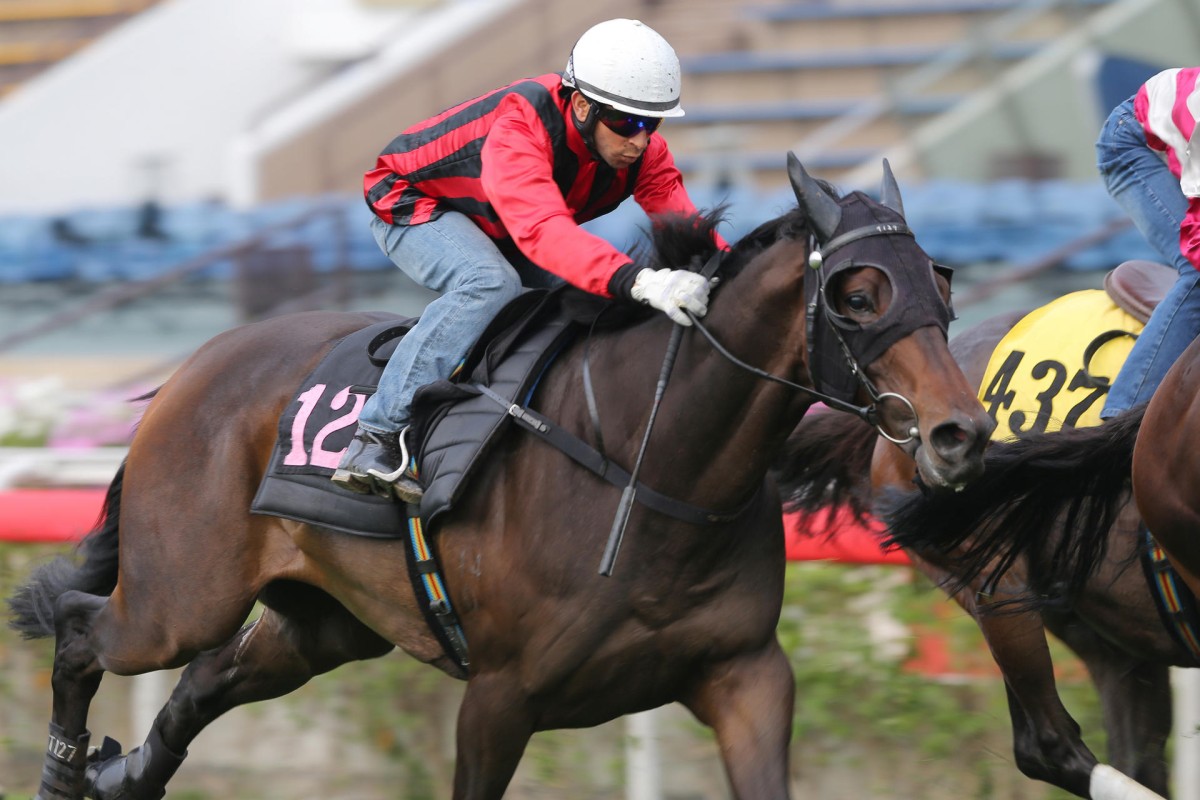
Even in the small Centenary Sprint Cup field two weekends back, let alone 14-horse fields last Sunday, it was hard to miss the jockeys trying to squeeze their mounts into places on the outside two or three lanes.
There are no bias deniers, and the compromise between the fact of the grandstand fast lanes and obvious safety issues when everyone who is serious heads out there, has given birth to a new style of riding the straight.
It might have been Brett Prebble who pioneered it on Ultimate Winners a season or two back or perhaps Zac Purton on Sky Man early this term, but Prebble, Karis Teetan and Olivier Doleuze have all been seen employing it recently on horses drawn low.
The trick is to sit out of squabbles for the front or outside rail for the first half, when the field races more bunched or the front pressure is right on, then to sweep up and across towards the outside as the race gets serious in the last 300m and many front runners drop away. With fewer bodies and less congestion, it becomes possible to reach the fast lanes at the time when bias matters most, when mounts are being asked to run flat out.
 It isn't foolproof - only a couple of them have won and Prebble, for at least one, still caught a careless riding ban as he swept across into the fight - but at least it's slightly safer than 14 runners cramming across, which was starting to get very hairy earlier in the season.
Hopefully, that accident waiting to happen can continue waiting because we hear the Jockey Club is going to take practical steps towards fixing the problem - the bad news is that it probably won't happen until next season.
The solution will be to put up a new, temporary outside rail, perhaps three metres inside the grandstand rail, to take the suspect fast zone out of play and to move the starting gates back to the inside fence.
There will be tweaking of the arrangement according to the rail placement but it seems a common-sense option with a chance to be the right answer - definitely more chance than leaving things as they are and waiting for a bad fall.